Vintage Hardware
Decades of deferred maintenance on the Rayburn Building is coming back to bite Congress, but the AOC is under steadier hands
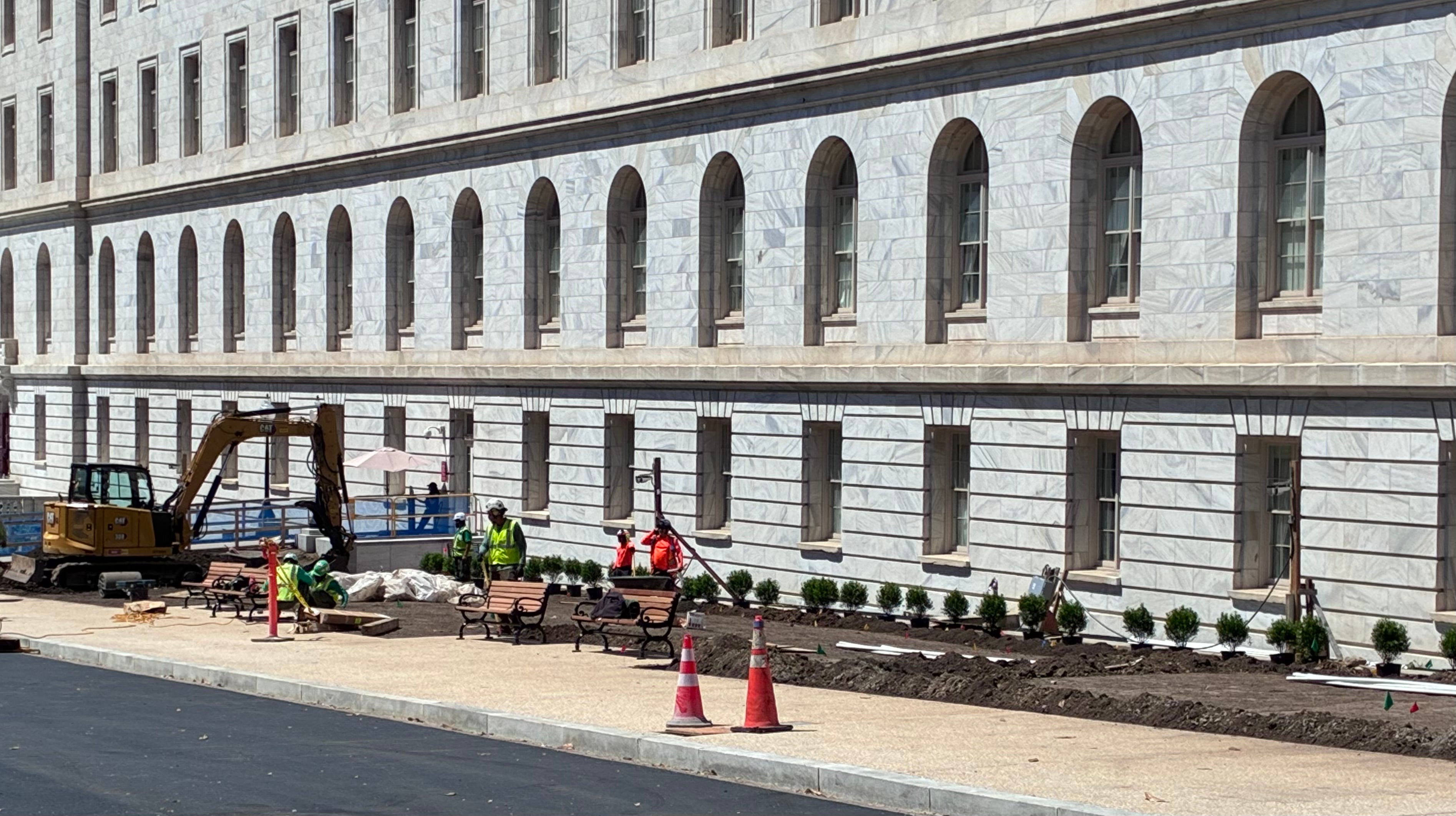
Last year, a 60-year-old air handler unit at the Rayburn House Office Building threw a bearing and started malfunctioning, knocking out climate control in 22 office suites. It and all the other units are original to the building that opened in 1965, and it could have caught fire if maintenance workers hadn’t diagnosed the problem promptly. It was also fortunate that Congress was mostly in recess at the time and the weather was mild, so work could continue in those spaces. But if it couldn’t, Capitol campus only has four swing suites available to relocate people. If the incident had happened during the full heat of the Washington summer, the House would have had to figure out how to cram members and staff into hearing rooms and public spaces in other buildings, interrupting committee proceedings and greatly complicating security and public access. The work of Congress would have ground to a halt, like the broken escalators members often complain about.
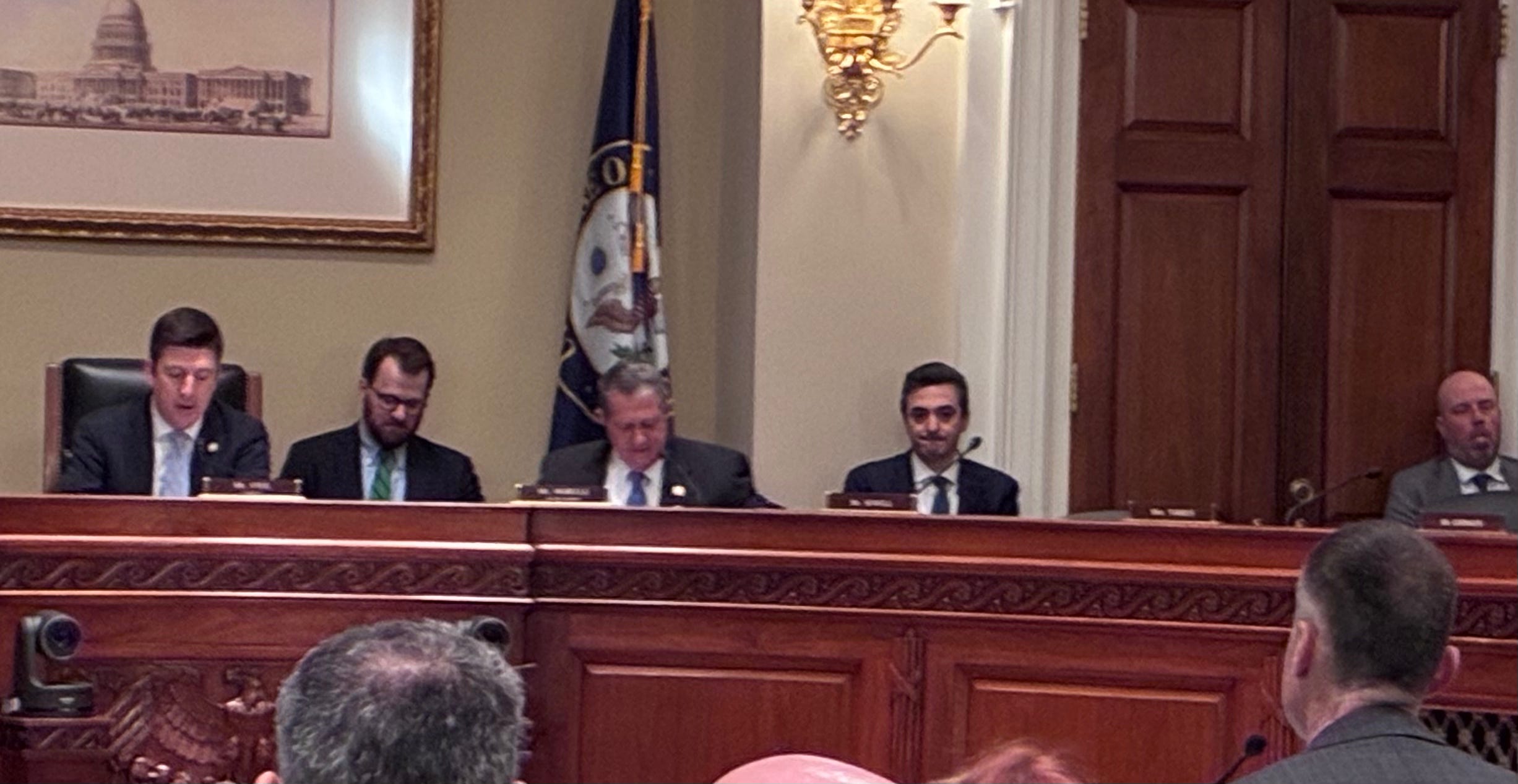
Architect of the Capitol Thomas Austin shared that anecdote with the Committee on House Administration Wednesday to provide an example of what “catastrophic systems failure” inside of an office building means to congressional operations. There are nearly 200 member offices and committee hearing rooms in the 2.4-million-square-foot Rayburn Building, by far the largest of the three House office buildings. An electrical, water, or climate control systems failure could force the relocation of many more than 22 offices, which would be enormously disruptive to legislative branch operations. It could happen during some critical work period for Congress, which could impact the nation.
The culprit for Rayburn’s condition, Austin explained to the committee, is decades of deferred maintenance. Past congresses have been so parsimonious with maintenance budgets that much of Rayburn’s electrical hardware, plumbing, and ducts are original. That broken air handler? It reached the end of its expected life cycle in the 1990s. It is so old the AOC had to use a custom-fabricated replacement part to repair it.
And yet, current appropriators are repeating the behavior. Austin said his team has identified $600 million in necessary projects for this budget year alone. The Legislative Branch Appropriations bill reported out of committee recently only provides $689.2 million for the AOC in total. Although it provides funds to start renovation design work promptly, the bill included no funds for designing the swing space and parking structures the AOC needs to start on the Rayburn project, effectively hamstringing the agency until Congress approves and funds a swing space plan.
At the hearing Wednesday, CHA Ranking Member Joseph Morelle, who is also on the Appropriations Committee, said he was “deeply disappointed” in that committee’s decisions.
“Allowing the buildings we work in to deteriorate around us is a fitting illustration of the broader failure to strengthen and sustain Article I that has come to define, in my view, this Congress,” he added.
We remain confused as to why there remains a disconnect between the authorizing and appropriating committees on the Rayburn project. At the hearing, CHA Chair Steil thanked AOC Austin for sharing the findings of the AOC internal swing space study late last year and for regular updates on the options under consideration. The AOC prefers to build a new building to serve as swing space, which is one of two swing space options that the National Academy of Public Administration considered in a 2020 report to Congress (NAPA recommended constructing temporary office space in the Longworth Building’s courtyard.) Morelle mentioned the NAPA study in his opening remarks, so CHA is aware of the options before it. However, in a story about the hearing, Rep. Nick LaLota told Politico’s Katherine Tully-McManus that appropriators still needed “our own proper understanding of the evidence” before making a decision. Recall that the original report language for the Legislative Branch Appropriations bill chided the AOC for not providing enough information on the swing space options, only to admit it had been looped into plans in the manager’s amendment.
Appropriations Chair Tom Cole, meanwhile, told Tully-McManus, “I’m not terribly worried about” the $9 billion proposed renovation plan because he wouldn’t be in Congress when work is finished. Again, deferred action.
Although Austin said the agency will follow Congress’s directive, the AOC prefers building over the west House underground garage. The permanent building would be the multifunction option as it could serve as swing space for a Longworth renovation. Austin also mentioned in the hearing the building could be used to “reshore” hundreds of thousands of square feet Congress leases in the District, providing some cost savings. That potential received nods of approval from the chair and ranking member. Along with Rep. Morelle, Rep. Mike Carey voiced support for the new construction option.
PROJECT BUDGET CONTROL
During the hearing, members were eager to dig into why the cost estimate for the Rayburn project was nine times greater than the Cannon renewal, which is finishing up. Austin noted that the Rayburn project would be one of the largest building renovations across the entire federal government. Because of the building techniques used in the ‘60s, it is chock full of asbestos, even on its structural steel. On top of remediation and historic preservation costs, the AOC would need to keep part of the building in operation and open to the public while work continued if it lacked enough swing space, which Austin said would drive up costs further.
Members also inquired on what the AOC had learned from the Cannon renewal experience, which ended up being nearly $200 million over budget and took a decade to complete. First, Austin answered, the phased approach it took to advancing the project in stages was a failure that it would not repeat with Rayburn. The AOC also tried during the Cannon project to limit interruptions to congressional operations, which meant it had to do a lot of construction work on nights and weekends, which drove up costs and was inefficient with labor. Hence, the swing space plan. Austin also said that Cannon suffered from poor change management. The project had a “low threshold for changes” to the design, and members made many requests to change plans. This time, the AOC would “make sure that we nail the design up front” and only make changes for health and safety concerns, Austin said.
Members also developed a false expectation for the cost of the Cannon project because of the way the AOC created its estimate. Austin told the committee that the original estimate of $750 million was drawn up in 2009, very early in the process for such a project, and included an unusually large 40% estimate buffer. The final cost of $971 million actually is well within that 40% range, and also reflects pandemic-era inflation for building materials.
Austin, as Mr. Morelle noted in his opening remarks, is the first Architect of the Capitol chosen by Congress itself. Many committee members expressed appreciation for his efforts in the position over the last two years (we note that no other Democratic members of the committee attended the hearing), which suggests the AOC appointment reform has strengthened relations between the agency and CHA. Austin and his team deserve credit for righting the ship after J. Brett Blanton was removed from the position and for continuing to do more with less in terms of budgetary support. He noted the agency has a 95% on-time record with its current work orders.
It’s worth remembering that the AOC does much more than manage construction, repairs, and maintenance of buildings and grounds. Steil raised Austin’s role as a member of the U.S. Capitol Police Board and Rep. Barry Loudermilk asked about the strengthening of complex physical security after the January 6 insurrection and relations with the Sergeant at Arms. Austin mentioned coordination with the House Chief Administrative Office in upgrading committee room technology. Having someone in whom members have confidence in this role pays considerable institutional dividends.
APPROPRIATIONS
The scheduled Senate Appropriations Committee markup of its legislative branch package was postponed Thursday to accommodate vote-o-rama for the immigration enforcement reconciliation bill. We were hopeful at least to see the report language and bill text, but alas.
Institutionally, this reconciliation bill remains a travesty. Funding for ICE and CBP outside the annual appropriations process and over the remainder of the Trump Administration effectively shields it from alteration by the next democratically elected Congress. It also means these agencies will not be subject to administrative provisions and riders added to appropriations bills routinely. All of this can be done with a 50-vote threshold. (Georgetown’s Matt Glassman and budget wonk Kevin McNellis have an expansive conversation about this topic on Matt’s Substack.)
Senators also approved the January 6 slush fund, but only after managing some of its political toxicity. Punchbowl reported that departing Senator Bill Cassidy agreed after some arm twisting to vote against an amendment offered by Senator Chuck Schumer to remove the fund, providing the vote margin for several Republican senators in contested reelection races to vote for it. If Cassidy had succeeded in producing a fund-killing amendment that could pass with a 50-vote threshold, as he attempted, they would have voted no on it.
POWER OF THE PURSE
NOTUS has two important stories on the Trump Administration commandeering congressionally-directed spending to shape the national historical narrative as it prefers. For the 250th anniversary of the signing of the Declaration of Independence, the White House is withholding most of the $150 million Congress appropriated last summer for the bipartisan America250 commission for celebrations. The Trump Administration created its own alternative commission within the National Park Foundation and funneled $68 million of public funds into it. Because the foundation was set up to receive private sector donations to the National Park Service, Trump’s Freedom 250 also can receive outside money that is difficult to track. The fate of that $68 million is also unknown.
The Office of Management and Budget, meanwhile, has asserted control over how the Smithsonian Institution spends congressionally appropriated funds, instructing it to submit requests to spend funds to ensure programs are consistent with the White House budget. That document, of course, is not law, putting Smithsonian officials in the position of violating the Antideficiency Act and/or the Impoundment Control Act. Programmatically, it also sets OMB up to block any cultural content it doesn’t like: for example neither the National Museum of the American Latino nor the Anacostia Community Museum was included in the president’s budget request.
HISTORICAL DIGRESSION
These stories matter for more than the abuse of executive power and nullification of congressional spending authority. When I was in academia, one of my areas of expertise was the history of American nationalism in the late 19th and 20th centuries, so forgive me for riffing here.
Unlike most other peer nations, the American government never developed its own robust “official” nationalist narrative. Instead, it contributed to a decentralized cultural effort driven by patriotic societies, white supremacists, veterans groups, business, intellectuals and artists, and ultimately social reformers. That has made the cultural meaning of American national identity contested and reflective of the rights struggles of various groups to achieve equality. I think you can see that in several Smithsonian museums, which present no core narrative beyond the celebration of social and cultural complexity.
The administration clearly prefers to dominate that narrative itself. So far, it has failed to do so spectacularly. The Freedom250 organizing efforts so far have been a costly flop, not even being able to entice the living member of Milli Vanili to its cause. But administration-led celebration significantly privileges its political allies in civil society as they work to shape a nationalist narrative. Or perhaps more effectively, it spotlights who is not welcome to participate in nation defining, which is dangerous to the principle of equality.
Unfortunately, civil society appears not to be organizing a significant counter-narrative around the Semiquincentennial about American national identity, especially one grounded in America’s exceptional multiracial cultural and social traditions. Even if Trump only presents a vision of America filtered through white male kitsch (a cage fighting match, a car race, etc), if America 250 is successfully strangled, it’ll be the only story being told.
MAKER SPACE
Maker Space is a semi-regular new feature to spotlight the community of people inside and outside Congress who are tinkering with different legislative datasets and code to produce useful tools. The intent is to build awareness of these projects – large and small – to build that community and help people find out about cool stuff.
The first edition introduced the member press release data collection Capitol Press created by Derek Willis, and the second a congressional hearing database from Capitol Labs.
This time, we highlight a project launched by Candace Moix and Julie Lin, two alumnae of the TechCongress program, to provide a free, robust digital advocacy platform called MyCapitol.ai. AGI supports leveling the informational playing field when it comes to Congress, so this is a very exciting project not only for under-resourced advocacy groups and nonprofits, but congressional staff, too.
Moix told me the idea came from watching Senate staff during her TechCongress fellowship interact with advocacy groups and industry lobbyists, noting the disparity not only of impact on legislative activity, but the understanding of how to connect successfully with the right congressional stakeholders (which is also why we co-developed this advocacy playbook for nonprofits). MyCapitol combines a variety of government data streams to allow users to track bills and issues as well as what topics outside groups, donors, and lobbyists are engaging on. It also integrates with Claude to create bill summaries, draft sample bill text, letters, and policy briefs, and summarize members’ career highlights and policy accomplishments.
Moix and Lin are upfront about how they are using generative AI not only to produce content but help build the platform. They have a thoughtful best practices guide on their website. It’s really about making the fundamentals of advocacy as efficient as possible for small organizations that may not otherwise have the time to engage with full rigor. The data analysis capacity, meanwhile, is intended to help identify the right champions and most promising pathways for legislative proposals, which professional lobbyists and senior staff know from years of experience but is a steep learning curve for everyone else.
As a civic tech project, MyCapitol actively invites user feedback. Moix is hopeful that congressional staff also will use it and discover new use cases to build out. There’s also a lot investigative journalists could do with the platform, too.
LINK OUT
The GovLab’s Reboot Democracy blog recently featured a guest post by Rep. Laura Friedman’s Communications Director Zach Florman, who has built the (also free) Capitol Wire tool. It monitors the House Clerk and majority leader’s announcements of floor votes via AI automation and pushes alerts. It sounds like an updated version of the old Captiol Bells app, plus automatic bill analysis.
Florman explains he just built it so people wouldn’t have to rely on very expensive subscriptions for what is public information. He explains, “when Hill staff can get up to speed on legislation more quickly, they give better advice to the members casting votes. When reporters can track floor activity in real time, the public gets better coverage of what Congress is doing and why. And when anyone can actually see what’s coming to the floor and understand what it means, they can call their representative, show up, or make noise before a vote happens instead of after.” Exactly.
Reminder: the Congressional Data Task Force, which is the engine behind so many current projects, meets on Thursday from 2:00-4:00PM in the Jefferson Building of the Library of Congress, room LJ-119 and virtually (registration required online).
ODDS AND ENDS
The Office of the Whistleblower Ombuds is now offering training for members on working with whistleblowers through the House Staff Academy. Members and their staff can ask questions and pick up info sheets at its pop-up table on June 10 from 11:30 AM to 1:00 PM in the Longworth Cafeteria.
Not too Kean. Although he remains in some kind of care facility, Rep. Tom Kean is introducing legislation. Unless something changed we’re not aware of, bills require his physical signature, so this is not great.
Daniel spoke with PBS NewsHour last week about the Kean situation.
Declining staffing. The 119th Congress lost 1% of its staff at the end of the winter, Omar Awan of HillClimbers has found crunching congressional data. That decline is the second sharpest over the last five congresses for the same period of time on the calendar. He concludes that flat budgets in an inflationary environment is the culprit.
Ethics challenges. Is one of the reasons the House Ethics Committee has been light on male members accused of sexual misconduct gender bias within the committee? It’s never had more than four female members out of ten serving at once.
Budget reform. Americans for Prosperity’s Kurt Couchman examines how instituting an annual budget process along the lines of Rep. Blake Moore’s reform plan would remedy government shutdown politics and provide rank-and-file members with greater input.
Defying gravity. The U.S. Capitol Police released a recent inspector general report from January that found employees assigned to posts outside the District received cost-of-living and relocation compensation even in places that have a lower cost-of-living than the Washington area. Employees assigned to San Francisco received higher cost-of-living adjustments, but those assigned to Tampa, FL and Brunswick, GA were still paid at the Washington, DC metro area rate. The IG questioned more than $580,000 of incurred costs for these positions. “Without fairly applying pay practices that are in line with the USCP’s governing statutes, regulations, and best practices throughout the federal government, the Department risks wasting resources,” the report concludes.