Interview: Catherine Szpindor
The retiring House CAO has been instrumental to modernizing the institution during her service to the legislative branch.


Catherine Szpindor is the ninth Chief Administrative Officer of the House of Representatives. First nominated by Speaker Nancy Pelosi at the start of the 117th Congress, she is the first woman to hold the position. First joining the Office of the CAO in 2011, Szpindor served as its Chief Information Officer from 2015 through 2020.
During her tenure in CAO leadership, Szpindor led the CAO through multiple historic congressional transitions and was instrumental in the House’s transition during the pandemic to remote work. She has been a champion for the modernization of House information technology and workplace software and has broken down the silos between offices that hindered innovative practices and effective management.
Although her term runs through the 119th Congress, Szpindor has announced she will retire at the end of this year. Before she departs, we spoke to her about:
Her experience in the Office of the CAO leading up to successfully transitioning the House to remote work during the pandemic, which kept the institution running
How she’s driven innovation in her tenure as CAO, including the development of a leading AI policy among global parliaments
The challenge of sustaining the internal development of new tools for member offices amidst enterprise software maintenance demands and tight budgets
How CAO has fit within the legislative branch and what the next CAO should know about the job
This interview has been lightly edited for clarity and length
Daniel Schuman: Just to set the stage, could you talk a little bit about what you do and how the CAO serves the House of Representatives?
Catherine Szpindor: Well, the Office of the Chief Administrator, or everyone just calls it the CAO, oversees all of the business functions for the House. That goes anywhere from our financials, our procurement, our logistics, and also, of course, the IT organization: but it’s an extensive group of individuals and that only mentions a few of them.
We’re nonpartisan, and we are very proud that we can serve both aisles of the House. Our real purpose is to ensure that the members and staff have all of the support that they need to do their jobs on behalf of the American people. We take a lot of pride and effort in that.
It is not only our mission to serve the members and the staff so they can do their constitutional duties, but it’s also what we do internally, which is make sure that we’re member-focused, service-driven, and we’re one CAO working together. That is the key to everything. The whole staff works with each other to make things happen. So that is who we are, and we’re very proud of having the opportunity to serve in that way.
Chris Nehls: You came up through the IT part of the organization, and I want to go back and just talk about something when you were the CIO before you became the administrator. You helped pull together the response to the COVID-19 pandemic, which we think was a really important moment for rapid transformation for the House in terms of technology. Can you just kind of walk us through that experience and what you might have learned and then took into the CAO role?
Szpindor: Well, I got a call from a friend, who I had known when I worked at Nextel and Sprint, who managed a job placement service, and he said, “Catherine, you need to come to the Hill. Can you come to the House and interview for something?” He said, “I’m working with the management in their IT organization, and I think you’re the person to help them.” At that time, I had retired. I said, “I’m down in Hampton, Virginia now, and I’m not in DC.” He said, “No, no, no, please come, please come, and at least interview.” So, I did.
So I interviewed, and they offered me the job. Then my husband and I hauled stuff back up to DC to an apartment. And that’s what we’ve been doing for 15 years, basically.
I worked with the Enterprise Applications Group for maybe three, four years, and they were doing great. They were talking to each other, and they were collaborating with each other, and they were doing great. So then I got asked to be the deputy CIO.
And shortly thereafter, the CIO left, and we looked for another CIO. I did the interviews because I wanted to find somebody that I could learn something from. And we interviewed some really good people, but they also were getting offers from a lot of other organizations, making a lot more. So, I offered myself as the CIO. I said, “Look, we’ve been interviewing, we can’t find anyone. Just let me do it. I can do it.” Ed Cassidy was here, and he said, “Are you sure you want to do this?” And I said, “Yes, sir. I’d rather do it than have to train somebody else to do it.”
Having worked for so many years in IT, it was just a really good fit. And there were a lot of things that needed changing. We still had Microsoft running our email on premise. A lot of different areas within the IT organization needed to just mature very quickly.
We made some good progress, and quite frankly, the work we did to bring Microsoft Copilot in was something we envisioned back in 2017 as what needed to be done to step us forward. I don’t know what made me push for it. I think it was divine intervention, maybe, that said, “You’re going to need this, lady.” So we did the rollout of Microsoft Office 365 and we got it ready to implement right before the pandemic. Teams also was implemented at the time, and we did a lot of training to get people up to speed on it. It was just a godsend, I think, that we were able to be ready when we really, really needed it.
On the heels of Microsoft, we also rolled out WebEx and Zoom, like bang, bang, bang, one after the other, because there were some members who were very comfortable with Zoom, some with WebEx. It was just a combination, and it played well. And I’m so thankful we were able to get that done, because I don’t know how the House could have communicated with each other remotely without it.
We did hearings with WebEx. It was just one of the things that I’m most proud of. I’m proud of a lot of things, but I’m proud that we were there, that we pushed. It was not easy to change the organization, to say, “We’re not going to do this on-[premises] anymore.” But we kept pushing, and we did it, and we all stepped back and said, “Job well done.”
Nehls: Do you think that that shaped the culture going forward?
Szpindor: I think it did. What we did was to bring in all of the PCs that were needed for the offices so they could work remotely, what we did working with the House leadership, working with the other officer organizations, the AOC, the Physician’s Office, and everything was so important… We were the ones who were making sure that equipment got handed out when it was needed: all the PPE, the masks and hand sanitizers, along with a tremendous number of PCs that we had to make sure that the offices had so they could work from home.
I can tell you the technology group and many others [Logistics and Support and volunteers from other teams across the House] worked night and day to get the PCs set up, made sure that they had the right software on them, that they could work remotely, and then issue them to the members and the staff to be able to take them home and use them when they had nothing else to use.
So I’m very proud of how we worked. I said night and day, but it was literally night and day to get everything done. I was proud we rose to the challenge and did what we needed to do, and could support the members remotely if they had any issues with their equipment.
Schuman: I mean, we saw it from the civil society side. I was running through the House buildings the week before the Capitol complex closed as the member offices were trying to figure out what to do. The questions of continuity of Congress — this is not something that had been gamed out, at least as far as I know, along the lines of needing to be away from not just the Capitol complex, but from each other for a long period of time.
There was a lot of obvious work that had gone in to try to figure out how to make the buildings safe. People didn’t know what that looked like to allow the members to operate, or the committees to operate, or the leadership to operate, or the support agencies to operate. And I think that the move from on-premises technology, which had always been a concern in part because of Speech or Debate Clause and concerns about other access, was a lifesaver. You did it, and it worked. We watched parliaments around the world simultaneously try to solve the same set of questions that you were solving, and it was tremendous. So, as someone who cares a lot about Congress, I appreciate the work that went into that.
Szpindor: Thank you, I really appreciate those kind words, but it was where everyone had to work together to make it happen. I think the lesson that it taught us was that we are better if we’re working together. We’re stronger if we approach a problem with all the right people there.
The House Recording Studio — I just want to put in a plug for them — and our CAO Advocates that work with the member offices, and our technology partners were in there working right along beside us. Every day after we started all of the online hearings, we would have a debrief in the evening on what went right, what didn’t go so well, where there were issues, and we worked to get it corrected before anything happened the next day. So I didn’t sleep much then, but it was just incredible to see everybody come together for the benefit of the members and the staff.
Schuman: There are two major incidents during your tenure. The second, of course, was January 6th, which was sort of an inverse problem of COVID, with tremendous security implications and safety implications. It was a terrorizing experience. People were rightly scared for their lives. And you were at the center of that hurricane as well. Can you talk about that a little bit?
Szpindor: A little bit. It was a very unfortunate day that I hope we never see again. And it was traumatic, because I was here with 3 of my staff in this office for four and a half hours until the police came and got us. It’s hard without choking up to talk about it, quite frankly.
But I will tell you what I thought was very rewarding: when the House came back in session that night, the CAO staff was there to help open the Longworth Cafeteria so that members and staff who had not had anything to eat at all since breakfast were able to go in, as well as police officers, as well as any employee that had been hiding in an office for a long period of time. Additionally, our House Recording Studio stayed and ensured they were at work when the House came back in session that night and so were many of our other staff resuming their job responsibilities. It was just a real testament to the commitment of our staff and something I will never, ever forget, that we were able to accomplish it when everybody really was looking forward to just going home. You know, I still see some of the reels and news reports from that day, and I just can’t look at it. But we learned that we can succeed when we work together, even in bad times.
Driving innovation
Schuman: It seems that COVID and the January 6th attack helped catalyze efforts to change the institution in a number of different ways. There had been these efforts ongoing for many years — some around continuity of government, some around remote participation, some around just straight-up modernization. You can see it in the work of the appropriators and the authorizers, and the Rules Committee and leadership. But it seems that things accelerated during the pandemic in particular, where there were a lot of ideas that had been kicked around that were implemented.
With the CAO being at the heart of House modernization efforts, and working with the ModCom and its successor, and the [Legislative] Branch [Appropriations], and leadership, what has changed? If you were to point to both successes and things that are ongoing, what would you point to as illustrations of how the CAO has changed in the context of the House?
Szpindor: I think we’re closer to our leadership than we were even when I first started, or when I was CIO. There was always a collaboration, but kind of a distance between feeling like we were working as a team. I think that today, we are very close with the leadership staff that we have both in the majority and the minority. We meet and talk to them on a regular basis. We have a real, good, open line of communication. So, I’ve seen that evolve considerably over the past 15 years.
Schuman: That’s good, that’s the way it should be.
The House is an evolving institution: Are there things that are on your roadmap, or that you would suggest should be on somebody’s roadmap, for the next five or ten years for how the CAO should be serving the House?
Szpindor: Well, yes. We’ve been trying to emphasize the need for communication with the members and their staff, to find out what it is that member offices really need from us. I mean, we’ve done things — I’ve got a list here — in the past several years: Dome Watch, LegiDesk, the House AI Center, constituent casework tools, FlagTrack, on and on and on. And we just didn’t think up these things ourselves: We had someone say, “you know, it would really be nice if…”
I think we need to continue making sure we’re in touch with what the members’ staff and the members need is the way to give us a real chance to continue to evolve this organization to what is going to make life easier for them. It isn’t about making my life easier. There’s a lot of things we have to do in our organization to make sure that we’re staying ahead of the curve, but it really is all about the members and their staff. If there are things they need and we’re not aware of it, shame on us. We need to be in touch.
So I hope, and I think, that right now as we develop our new mission, vision, and strategy for the CAO, which we’ve been working on, so much of it is focused on talking to the members, having sessions where we gather information on what is causing them not to be able to work as effectively as what they should be. I am sure that’s something that we need to continue working on after I’m gone.
Schuman: So just on that point, in my experience I often found that members or senior staff would have a concern or an issue, but oddly enough, they didn’t feel they themselves were empowered to go and raise it. “We’re here to help the American people, but when I’m trying to solve a problem… I have a letter that I need 20 other offices to sign, so we’ve been walking them around to every member office,” right? Those types of things. They know it’s a problem, but they don’t think about it institutionally. And on the flip side, you think about things institutionally all the time. How do you bridge that gap?
Szpindor: It’s through communication. It really is through one-on-one communication. We have information fairs that we do from time to time. The Hackathon is another example of bringing in technology ideas and products, and a lot of the members and their staff come to that. Then, it is also just us being proactive and going in and sitting down with the member and their staff and saying, “these are some of the things we’re thinking about doing. What do you think about that? Would that help you? Is that something you could benefit from?”
When I first got to the House, anyone from IT didn’t really have an opportunity to do that. It was more of getting direction from leadership and then doing what they’re asking us to do rather than a real, real collaborative effort. So, I think collaboration and reaching out to the member offices is a way to make good communication happen.
Sustaining development
Nehls: Daniel and I are the type of people that actually watch people like you testify on Leg Branch Approps. This year, you talked about how you’re basically out of the slack that you could pull in on the things that just have to be done to modernize. Can you talk about the consequences of being so lean for so long on what the CAO wants to do, or maybe what you haven’t been able to do in terms of modernization because you’ve got to replace the HR software or something that’s critical but not moving anything forward?
Szpindor: Well, just an anecdote on that: we are getting ready to put out the RFP to redo the HR payroll and benefits system. It’s long overdue, and there’s an opportunity to really improve the processing, how we interact with the system, and also how we’re able to answer questions a little bit better than what we have in the past. So we did get the funding to move forward with that, which I’m very thankful for.
There are things that we have to prioritize. So a couple years ago, when things began to get really tight, we started looking at project prioritization and project planning with a huge emphasis on the project management of what we’re doing. I review, or have reviewed, the project status on a regular basis. Every quarter I look at what they’re doing, how much progress they’ve made.
Right after the budget declaration on exactly how much money you’re going to get, we started saying, “okay, then there are some things in here we’re going to have to push out,” or, “what is the most important thing that we have to do?” And we went through an exercise of just cutting, saying, “okay, which one’s more important, on a scale of 1 to 4?” Those that fall to the bottom, we put them on a list in case there’s some dollars left over. We see if there’s a different way of doing it, and to ask for it again during the next budget cycle.
Of course, the top priority is always making sure our cybersecurity is intact, and that we are working on those things that have a real impact on the ability to run our systems and to service our members. We are very diligent when we put the budget together … I’ve cut it and cut it and cut it before I send it in to the budget office. But I feel like that if it is something that we absolutely have to have — if there’s a real issue that comes up, and we need to do something — we can make a case to the appropriators for something that is a critical service we need to provide that maybe did not get into the budget this year.
Nehls: We were happy to see the modernization account still have some funding, although I think it’s down from what it started with. Are there things that are just left off the table on the MIA that would have been green-lighted if they had the funds?
Szpindor: I’m being totally honest here — I think that the things that we really need to do right now are being kicked off and being done. Are there things that we asked for that would be helpful, but are they the most critical? Those probably are going to wait for another budget cycle. So I don’t think the House is hurting right now with us focusing on some of the projects that we currently have. I think they will benefit from those greatly. We would have liked to have done a whole lot more, but we’re still doing a lot. So it is what it is.
Schuman: One thing that I worry about, in the context of the earlier part of our conversation — one could have continued having on-premises email, right? It worked, mostly. But there was a change that was necessary, and the House looked forward and made that change and it made everyone’s lives better.
There is one bucket of the things that we have to do right now: we have to be cybersecure, with all that that entails. But there is also another set of things which are not “these are mission critical this year,” but they are things that make it much easier for people to do their jobs. Like, if you can fill out your timesheet in three minutes instead of in ten minutes, times 18 people per member office, times 441 member offices, plus all the additional staff, there is a cost savings. There’s a point of inflection.
Chris and I love to dream up new projects of things to do, but just little changes like the change with the flag [requests]. The old system worked, but it was far from ideal. The new system is better, faster, cheaper, more efficient, and is a better user experience. It wasn’t necessary, but it creates a savings, and it creates a benefit.
I worry about that next bucket of things that are not the urgent, “we have to make the case for it right now,” but I don’t want it to be pushed off forever. Can you talk about that just a little bit?
Szpindor: Well, mainly just to say, those things that didn’t get funded the last time haven’t gone away. We will be probably bringing them up again with the next budget cycle: “We really need to do this, okay? And here’s the benefit of it, and here’s what it’s going to be able to allow the House to do.”
It’s disheartening, yes, but it is the way they decided, so I have to go with what was decided. But we’ll come back again. For those things that we really wanted to see done, they’ll be on the list for next year.
Schuman: And one of the things that you have invested in, that the House has been interested in investing in, is AI-related stuff. The House is one of the first parliamentary bodies that I’m aware of to develop AI guidance. There’s new tools. You announced the Copilot capability earlier this year.
Szpindor: We put it out to everyone in January.
Schuman: I was hoping you could talk just a little bit about the role that the CAO has played in both shaping and implementing the AI policy, and also more broadly in balancing innovation and risk, in terms of new tools and technologies that are made available to member offices and staff.
Szpindor: Well, I’ve been around for a long time, and I’ve gone through every evolution of technology you could imagine, from the mainframe… I actually talked to Grace Hopper, if you know who that is.
Schuman: Yes!
Szpindor: I’ve seen cycles of technology improvement over the years. I know that when you have something like AI, just all of a sudden, it’s here, everybody’s got to have it — there’s a hype cycle you have to go through. You need to take a pragmatic look at it, an honest look at it. I was very proud of the fact that we were able to get out our AI policy so quickly. And it’s thorough, and it’s good.
We are using AI in some of our tools, like AWS: but where those reside within our infrastructure for security purposes. Some of the AI tools — especially the large language modules — we have been using for years, and no one even really knew it. So, it is part of how technology works today. I think Copilot is a good tool for someone using Microsoft, and I think they’re going to continue to improve upon it.
I believe we will continue to integrate with those AI technologies that make sense. You don’t go out and just get it for the purpose of getting it because it is expensive. I think that we’ve got a good approach for how to look at the tools and the opportunity to use it for the betterment and increased efficiency of the everyday work that people do.
But is it the end-all to everything? No, it’s not. It’s a good tool to be used appropriately. I think that there are a lot of AI products you have to be careful of, because they’re being used inappropriately right now — not here at the House, but in the general population.
Schuman: I think that’s right, and we have seen the hype cycle for many different technologies, which is interesting as it comes and goes. And people confuse the GPT model, the large language models, with the natural language processing, right?
The amendment tool that the Clerk’s Office helped develop was new, but the use of data models for legislation started in the House in the ’90s. People don’t realize that Congress has often been at the forefront of developing tools for its use. It’s not behind; it’s trying to figure out how best to use technology to solve the problems that it has within its financial and operational constraints.
Chris and I are on the civil society side, and we partner, and sometimes we nudge, and sometimes we collaborate, with partners in the House and in the Senate and elsewhere. As you think about innovation that’s happening in the legislative ecosystem, do you have a sense of how civil society and others might fit? Is it useful for you? Is it a nuisance?
Szpindor: Of course, I don’t do a lot with the legislative process — that’s for the Clerk and the member offices. But I’m very familiar with the [Office of] Leg[islative] Counsel and some of the things that they’re looking at doing to be able to make it easier to gather information on legislation that has passed. And I think there’s some real opportunities there for anyone to better understand or better learn about the legislative process and what’s being drafted and what bills are being passed.
Schuman: I was thinking in terms of Melissa Medina — she helped build Tour Tracker, which was a way of facilitating constituents communicating with member offices about what tours they wanted, and that is more of an operational question than it is a legislative question. I think that there may be other technologies along those lines as well. You could imagine it for member day visits, or interactive maps, which is a CAO-related function.
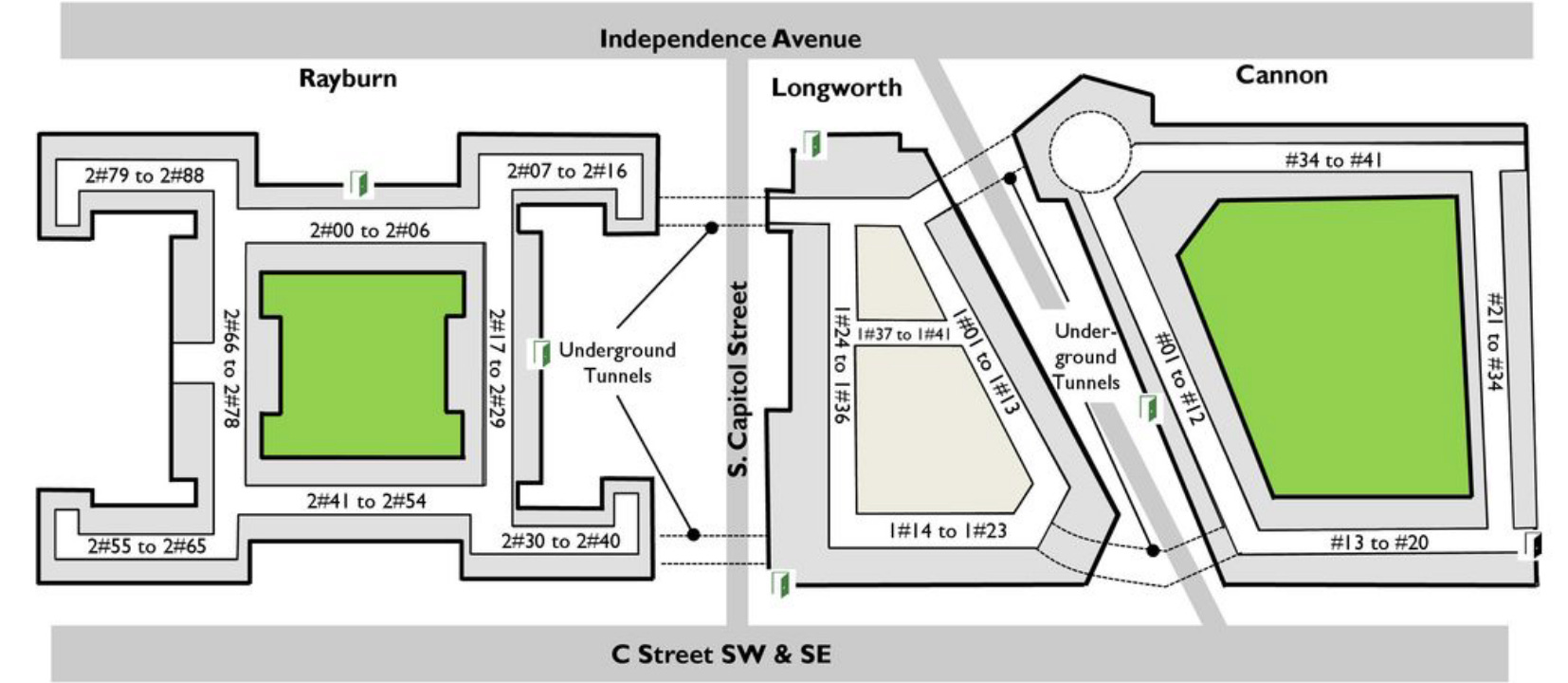
Szpindor: There are some things that we’re getting ready to start. We are going to be able to do wayfinding for some of the House office buildings, and that received approval by [the CHA Modernization Subcommittee]. I would imagine there may be potential AI modules included for that. We’re really excited to do this project because we believe it’s something that’s much needed for individuals visiting the House to know where to go.
I’m sure if you’ve spent much time in the halls, you’ve probably helped people get from one place to the other. This is an opportunity to really provide a way in which individuals can come into the House and easily find the direction they want to go. So that’s going to be rolling out over the next year or two.
Schuman: I can’t tell you how excited I am for the wayfinding. When I first came to DC in 2001, I worked in the Senate briefly, and then came to the House. I remember I was a staff assistant, and I took the member I was working for and another member somewhere in the Capitol complex and they wanted me to lead the way, which is not a good sign. And of course, I proceeded to get all of us very lost.
Szpindor: I got lost a number of times when I first came to the House. I will never forget it, it was hysterical. Dan Strodel, when he was still here, was having all of the senior leadership in a meeting and I had been at the House maybe a month or two. I’d been up here a couple times, and I told my boss at the time, “Oh, I’ll just meet you up there.” I wandered around the Capitol for hours, it seemed like, and I finally just stopped a police officer and said, “Don’t give me directions. Take me to this room.” They did, thankfully.
I walked in, and of course, everyone was seated. I was so embarrassed. Everyone was seated, and my boss looked at me, and he goes, “Where have you been?” And I said, “I do not know. I’ve been just wandering around the building.” So I personally understand.
Schuman: Well, I’m glad we’ve had similar kinds of stories.
Nehls: The Clerk’s been around since the founding of the House. The Library of Congress was chartered in the Jefferson administration — but the CAO’s pretty new. And there are still some touch points with some other offices that have different oversight of other technology.
I’m just curious now that you’ve seen the CAO’s place, how the House organization for this looked to you, and what should we look to maybe reorganize or change about the way that we deal with the technology and the non-legislative and the legislative responsibilities of the various offices coming together and working together?
Szpindor: Well, since I’ve been at the House, I’ve had a really strong relationship with the Clerk’s Office, and most of our IT organization has, too. They work very closely with them, we’ve helped them out, and they’ve worked very well with us. Even the Sergeant at Arms Office for many of the technology concerns — we work collaboratively with them. So I think it has worked well. I think it can work well in the future, but we have to be able to talk to one another and rely on each other.
Regarding technology, I am going to say that our cybersecurity group and the technicians that actually roll out the systems and monitor the systems are some of the best I’ve ever worked with, and I’ve worked in Fortune 500 companies.
As far as working with the legislative process, I know Jamie Crotts, who is the CIO, has had an ongoing meeting with the Leg Counsel and the legislative groups where they meet and talk about some of the things they’re getting ready to do and we see if there’s any common technology that we could look at. There’s a lot of things going on behind the scenes that people probably would not see.
Nehls: You know, one of these ideas that’s been kicking around is a chief data officer for the House, or even maybe for the Leg Branch. What do you think about that as an idea?
Szpindor: I think for the branch as a whole, it could be difficult, because the data is different in each of the organizations. We have individuals within the CIO’s Office that focus on data on a regular basis, so I don’t know what the mission for that particular position would necessarily be, and how they could understand the needs in all the organizations that we have.
We would be open to discussing that with whomever is interested, but I’m not sure how that would work. We have a lot of checks and balances on our data. In fact, we’re going through a financial statement audit right now, and we have the IG’s Office that comes in and they are constantly looking at our current systems and things of that sort.
Schuman: I think the conversation behind it was that this would not be a directive office but more of a communication facilitator. The House, the Senate, the support offices, and the support agencies are in touch with each other to a greater or lesser extent, but there isn’t always an understanding of who has what and when, how they are using it. Facilitating more of that conversation, I think, is where that idea is coming from. Imagine the role of the Congressional Data Task Force, but one level more.
Szpindor: From that perspective, I think that it would be helpful just so that people know where they could go to get access to data. In that particular use of the term — because I know some organizations have a data officer and they pretty much are checking to make sure everything is laid out right — I can see where that might be beneficial. That would make sense.
Schuman: So we have one final question for you, and we really appreciate how generous you’ve been with your time to chat with us today. And this is wide open: if you have a piece of advice to offer to the House, as it thinks about how to best serve members and the public, what advice would you have? What would you share?
Szpindor: I have a couple points here. Continue to listen to the voice of the members and the staff. And when continuous improvements are needed, make sure that you’re staying current and you’re delivering as effectively as possible to the House.
And I think, “Let’s work together,” is probably the most important thing that we can do. No one person can do this all by themselves. It takes everyone to make something work and work well, and you’ve got to keep improving, you’ve got to keep looking for opportunities to upgrade your technology, upgrade your systems, and train your people.
That is what I see they have to do in the future. You can’t be lax with a lot of this. You have to be on top of it.
Schuman: That’s great. Well, I wanted to thank you for talking with us, and thank you for your service as well.