Insurrection Without End
The Institutional Costs of Presidential Impunity
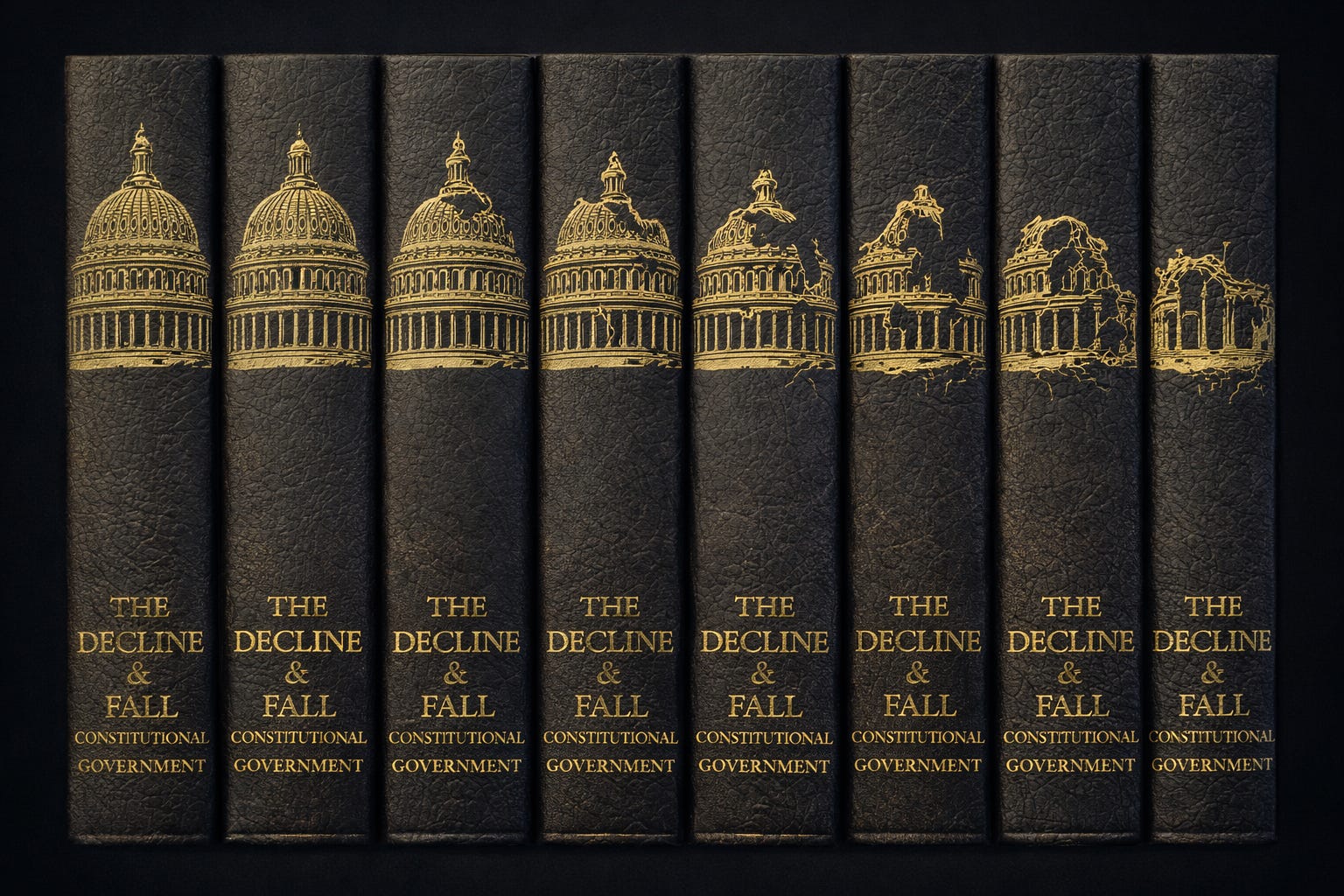
On the same day House Democrats begin a commemorative reconvening of the January 6th Select Committee on the fifth anniversary of the Trump insurrection, the perpetrators will return to the scene of their crimes in a victory parade. Neo-fascist gang leader Enrique Tarrio and nativist militia member Guy Reffitt are touting a repeat of their 2021 march from the Ellipse to the Capitol for Tuesday afternoon. That either man—sentenced to 22 and 7.25 years in prison, respectively, for their participation in sacking the Capitol—is now free to walk the streets of Washington is itself an indictment. It represents the failure of political leadership across the highest levels of government to respond proportionally to the threat posed to democratic institutions that day, or to confront the antidemocratic forces that continue to grip American electoral politics.
Responsibility for the failure to hold President Trump accountable for January 6 is widely shared, beginning with the decision by congressional leaders not to initiate impeachment proceedings immediately after the Capitol complex was cleared. At each stage, leaders who deferred to the trappings of process or followed lifelong routines of sangfroid vote-counting failed to confront the nature of the violence itself: a deliberate attempt to overturn constitutional governance by force.
The mob’s violence wasn’t a consequence of the sitting president’s actions that day. It was his instrument, an extension of his understanding of how to rule. He saw nothing illegitimate in the use of force to pacify resistance to his desire for continued political power. His followers saw nothing wrong with serving as his instrument in this effort. It was a singular event in the long history of political violence in this country. As such, it deserved swift and absolute rejection. Instead, Mitch McConnell sabotaged the impeachment and passed the buck to the Biden Justice Department, Chris Coons kept his Valentine’s Day plans, and Merrick Garland demonstrated his lack of fitness to serve as the nation’s chief law enforcement officer.
The consequences of the failure to hold Trump accountable for political violence are manifest in the conduct of his administration in this second term. Immigration enforcement officers have been given free rein to use force in pursuit of policy goals. Enforcement agencies are recruiting from the ranks of January 6 protesters and organizations like Tarrio’s former Proud Boys. Trump mobilized the National Guard at the first sign of resistance and then deployed them as shows of federal force. The administration has practically goaded protestors into situations where it can invoke the Insurrection Act—thankfully met so far with only inflatable frogs. Beyond American borders, meanwhile, “kinetic strikes” have become the language of the nation’s foreign policy.1
We are at a danger point where the violence of January 6 risks bifurcation in its memory: personally and collectively traumatic for those who experienced it first hand and increasingly distorted into a watered-down version within the public consciousness. The mainstream media tells the story out of both sides of its mouth, using a metonymy, January 6th, for what was much more than a date in history. A new House subcommittee will contribute to this process by holding renewed hearings later this month to focus on bureaucratic failures in security.
But even the Democrats’ commemorative hearing Tuesday holds the political and institutional ramifications of the day’s violence at arms’ length. The program announced by Leader Hakeem Jeffries will focus on administration threats to election administration, the placement of 2020 election deniers in administration posts, and the public safety threats of those pardoned. A more useful inquiry would connect the political intent of the January 6 violence to the ongoing dangers of presidential overreach and unconstrained executive power.
The violent intent of the January 6 mob has broader ramifications as the administration seeks to solve more and more of its problems through force and fear. Refocusing on Trump’s incitement is not politicization; the violence was political by design. The organized mob was trying to keep Trump in power, not merely express a viewpoint. Wrestling with that aspect honestly is an effort in defending the integrity and preservation of the Congress and Constitution.
Odds & Ends
The Jan. 6 pipe bomb suspect seems to fit into a pattern of conspiracy-inspired political lone wolves. Reports POLITICO, “the DOJ said suspect Brian Cole Jr. told investigators he ‘was going to a protest in support of [then President] Trump’ on the day of the attack.”
Georgetown Law’s Dave Rapallo charts how parties in the minority can still pursue investigations with the legal, procedural, and parliamentary tools at their disposal.
The minority’s efforts are much harder if the administration doesn’t show up to testify, though.
Trump issues wrathful vetoes even though copartisans are dinged.
A Final Note
Many of you are still suffering from serving Congress the day Trump’s mob stormed the building. It doesn’t matter if you are Democrats, Republicans, independents, or not politically-aligned. Twenty-five years later, I still feel the sting of having been on Capitol Hill on 9/11. It’s okay to take a break. It’s okay to disconnect. It’s okay to find someone to talk to. Some basic resources, including folks to talk to, are available online here.
We don’t even know what to say about Trump’s unlawful kidnapping of Venezuela’s president. This is a discussion for another day.