Mix and Match
As the Congressional Research Service tries to adopt AI consistently with its values, allowing staff to mix it up can lead to an internal culture of innovation
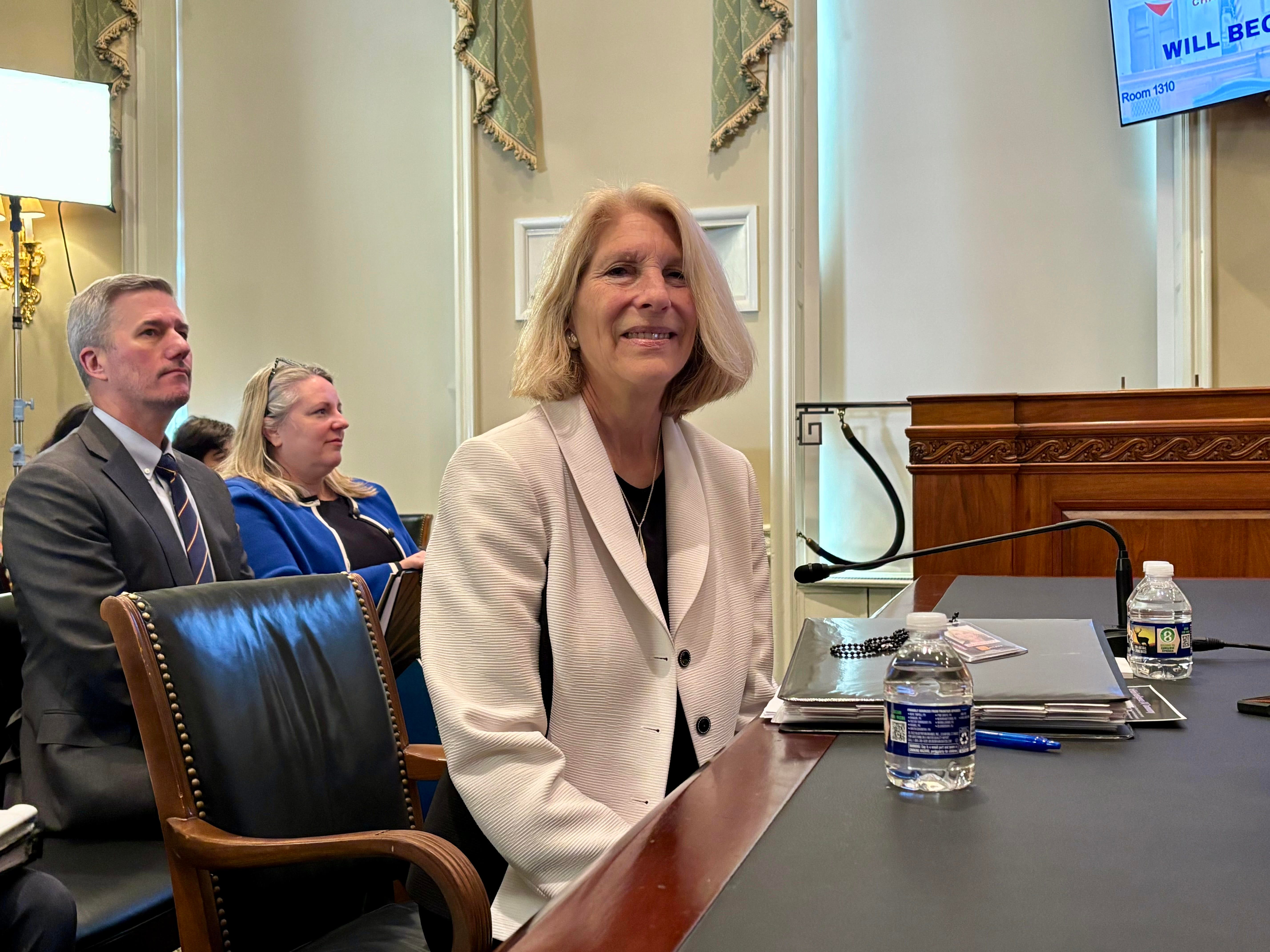
As artificial intelligence platforms are becoming more useful in supporting legislative analysis and policy synthesis, the Committee on House Administration called Congressional Research Service Director Karen Donfried to testify last Thursday on her agency’s present and future use of the technology. Committee members were effusive in expressing appreciation for the role CRS plays in supporting Congress and the dedication of its staff. The hearing revolved around whether and how AI could support CRS’s ability to deliver for Congress in alignment with CRS’s values and standards.
CHA checked in on CRS after a period of significant transition for the office. This was the first time that Donfried has appeared in front of the committee as director since taking over the role in 2024. The previous director, Mary Mazanec, stepped down three years ago after it became clear she was incapable of managing the agency and had lost the trust of CRS employees and of Congress. Robert Newlen stepped into the acting director role and began to clean house and address glaring problems at the agency. We are very pleased to see the House Administration Committee holding this hearing and we recognize its efforts to provide oversight over the legislative branch.
Congress has been encouraging CRS to use AI for a number of purposes, including notably to expedite the production of bill summaries. These summaries accompany legislation published on Congress.gov, but the twelve CRS analysts responsible for generating them are not capable of keeping up with the volume of legislation, and thus thousands of bills either lack a summary entirely or do not receive a summary in a timely way. Newlen, at his 2024 hearing, explained CRS’s engagement with AI and committed to reviewing using AI to expedite production of bill summaries.
Committee interest remained largely focused on that use case during the hearing. Donfried relayed that CRS had tested summarizing approximately 1,000 bills using six large language model-based products released over the last two years. (Her written testimony indicated agency testing took place during FY 2024, which runs from October 2023-September 2024.) When employees reviewed the quality of the 3,000 summaries, however, only 3% met CRS standards for accuracy, coherence, relevance, and objectivity for publication. She also explained that bill summaries are much more complicated than may initially appear, as they’re not just a summary of what a bill does but also how it would change the law.
Based on those results, CRS has shifted its attention toward using AI to streamline bill summary production, like identifying which bills are heading to the floor. Donfried’s written testimony states it “has a prioritized implementation plan for seven unique AI use cases across the bill summary workflow that, if fully implemented, is expected to provide a significant increase in the number of bill summaries produced by current staff.” The written comment suggests no development work will take place in the absence of new funds – “timely investment in an AI platform in fiscal 2027 will be needed in order for these gains to be realized” – but her oral comments suggest they may be able to use end-of-year money to address discrete places within the workflow. There was no discussion of whether other process changes that do not require AI intervention were being explored to expedite bill summaries, and we are unaware of a description of the bill summary workflow process being made available to the public.
Donfried indicated that CRS is using AI in other ways in the agency. For example, it is using AI to assist coding tasks that go into producing infographics. Also, at congressional direction, CRS has created five data analytics models. And it is categorizing comments on regulations.gov to identify whether they are supportive, neutral, or in opposition to a regulation. (The Sunlight Foundation had piloted this kind of tool, called DocketWrench, in 2012, which used Natural Language Processing.)
With respect to AI generating bill summaries with a 3 percent acceptability rate, some committee members nodded along to this finding as though it matched their skepticism about whether AI could produce objective and trustworthy analysis. There was significant conversation on this point, based in part on a recent Washington Post article. We know little from what Donfried said, however, about how those tests were conducted beyond that they used the free versions of popular platforms. Without information on what processes were used in the 2024 tests, it’s difficult to evaluate their assessment on AI’s summarization capabilities. We wonder whether more modern versions of the tools would prove more capable of meeting CRS’s needs.
In terms of near-term future expansion of CRS’s use of AI, Donfried reminded committee members of the Library of Congress’s roughly $5 million request to build an AI testing environment using secured legislative branch data and CRS’s request of an additional $1.6 million to hire five new staff with data science and AI development experience. Although Reps. Stephanie Bice and Joseph Morelle sit on both CHA and House Appropriations, CHA isn’t in the position to secure this funding. We have not closely tracked whether prior funds for CRS have been earmarked for AI specifically and how they have been spent.
MISSION AND CULTURE
Throughout the hearing, Donfried assured the committee that CRS would not compromise its five core values of confidentiality, objectivity, nonpartisanship, authoritativeness, and timeliness with AI adoption. Some of these values, however, are in tension when applied to technology, while others could be better served by greater openness by CRS to the broader legislative branch data community.
The culture of CRS is to default to what it defines as the most authoritative source of a document or piece of information either when ingesting it or making it public on user-facing platforms like congress.gov. This results in delays in CRS processing materials and in CRS making information available to Congress (and to the public.) For example, it is our view that appropriations bills published by the appropriations committee are authoritative; that bills published by committees on docs.house.gov are authoritative; that announcements of floor proceedings announced by the Majority Leader are authoritative, etc. In some instances, CRS waits for materials to be published by the Government Publishing Office before performing their analyses even when the materials are otherwise available, which can lead to a delay of hours to days to weeks before any CRS products are undertaken. The Congressional Budget Office, by contrast, looks to wherever it can find an official source of a bill to start its analysis, and may even reach out to the relevant committee for information. CRS staff may wish to do this, but some tell us they are not empowered by management to do so.
AI applications will not impact these overarching process decisions. Requests to CRS to improve their data acquisition and analysis processes are often tagged by CRS as problems with sourcing data from upstream data providers elsewhere within the legislative branch. The implication of that categorization is an implicit belief that the House and Senate should conform their publication practices and business processes to the ways CRS prefers to receive information, rather than CRS adapting its processes to the ways that Congress operates.
Interestingly, Donfried did not mention the CRS Text Analysis Program, under development since 2011, and refreshed in 2022, which uses natural language processing to identify bills with similar text across different Congresses and within different legislation. The new version, which CRS demonstrated at the most recent Congressional Data Task Force meeting on June 11, is very sophisticated and is used inside CRS (it is also available to House staff). The TAP is a great use of AI in service of CRS’s mission generally and in support of bill summaries specifically. Until this month, Congress and the public had little visibility into its operations.
We believe, in fact, that the text analysis capability is underutilized. Identifying relationships across legislation is something that can be done computationally, at least to a large extent. We know this because we built BillMap, a pilot program to draw these relationships across legislation from the same Congress and across multiple Congresses. Our purpose was not only to identify related legislation, but to draw together information associated with these different bills to provide context about that legislation that is useful for staff. To see what we mean, watch our live demo from 2021 here. This remains our vision of where we’d like to see Congress.gov evolve.
For now, the desire of CRS to provide unimpeachable authoritative information on congress.gov for the general public to access is part of the culture holding resources like TAP behind a congressional firewall. The value of computational matching of strongly-related bills is that the analysis can be done at scale and with a specific range of confidence in the finding. CRS’s approach likely would be to have a human verify every strong match, which undermines the scale and timeliness of the project’s output. We think people interested in this type of research can weigh the strength of a match on their own (when provided appropriate contextual information) and would benefit from tools that connect legislative information and reveal the level of confidence we have in that analysis. Requiring absolute certainty in a tool – which isn’t attainable in the real world – severely constrains its use cases. What’s worse, it forces users to seek proprietary solutions for analysis of data that is a public resource. When people cannot get the information they need from official sources, they will look elsewhere. It is our view that CRS’s role is to help Congress do its job, and that it’s perfectly fine to provide Congress with the facts as you understand them — the best analysis you can provide within given constraints —and let staff draw their own conclusions.
We are also curious about the extent to which CRS has the capability to develop tools in-house, or has developed projects in-house, but staff are unaware of them. Recall last week that we discussed the long-standing workplace culture within CRS designed to protect it from criticism of violating its core values, which when operationalized inside the agency stifle individual initiative and deter innovation beyond standard processes.
CRS is full of brilliant people, and some possess additional technical skills. Is experimentation encouraged inside CRS to use technology to help provide better service to Congress? Do staff have a forum to share ideas or identify common process challenges either within teams or across them? Does it support events like internal hackathons?
Are ideas for new technologies and processes embraced, or is there a fear that management will punish innovation? Does CRS encourage staff to attend the Congressional Data Task Force meetings, the Congress.gov annual meeting, and the Congressional Hackathon? To what extent are CRS staff engaged with civil society, academics, technologists and others who are trying to solve information analysis problems in the federal legislative domain? Or does CRS leadership and culture dissuade staff from taking advantage of the opportunities because, in their view, “CRS has no public mission” and thus will not talk to outsiders – even if those “outsiders” are elsewhere at the Library, the legislative branch, or beyond?
We know what the old culture at CRS was like. It’s difficult to see whether it has changed.
Our experience in speaking with parliaments around the world is that collaboration between internal and external stakeholders can yield significant improvements even when modest funds are available. Innovation can be spurred by constraints.
COMMUNITIES OF CHANGE
If CRS cannot hire the five experts it wants to in FY 2027 — and it appears challenging for CRS to receive the additional funds they’ve requested from Congress — fully utilizing its in-house techie capacity will be all the more important. Doing so will require shifting culture toward greater permissiveness that allows staff to bring more of their talents to light. A lot is being asked of Donfried already, so if this approach were adopted it may take time. Some members of the old guard remain in positions of power so there would have to be leadership from the very top of the agency to change the culture. Nonetheless, different parts of the legislative branch can be models for CRS in successfully shifting culture to greater cooperation and permissiveness for experimentation in support of its mission to serve Congress.
Civil society also can compensate for inadequate resources for technology innovation. The Library of Congress has the authority to accept gifts, which could include collaborating on tech projects for public use. Given the importance of the CRS mission to Congress, we are confident that the agency could build relationships with civil society groups and the emerging congressionally-focused civic tech scene. Again, as part of the Library, CRS has a public-facing mission that runs in parallel with its congressional one. Better structure and public access to CRS nonconfidential information would be mutually beneficial for the agency and the public. Rep. Bice started to raise this topic when she asked about creating an API for public CRS information as exists for congress.gov, but the discussion went in another direction.
Hopefully, hearings like this also will encourage CRS to emerge from its defensive crouch and participate more fully in the legislative data community that is sustaining much of the technological progress on the Hill. The Congressional Data Task Force is one existing forum for that community, and it was positive to see CRS demo TAP and not just talk about improvements to congress.gov (as much as we appreciate hearing about those, too). CRS has a huge trove of data useful across the legislative branch that remains largely inaccessible to cross-organizational efforts.
Much of this data would be supremely valuable to internal (and external) development of AI models and tools. For example, we’d be interested in how CRS has developed metadata for nonconfidential current and historical reports and what it would take for it to extract data from its files into machine-readable format. In other words, a question worth asking is how much can CRS contribute to AI development within the legislative branch, not just how much can it benefit from adoption. We remain, in the words of Acting Librarian Newlen, a loving critic of the Congressional Research Service, and it is our hope that the agency, under Dr. Donfried, will reach its potential. In fact, we shared with the committee our thoughts on how it can become more agile, innovative, collaborative, and transparent while meeting its promise of maintaining confidentiality in its congressional services last week.
Next up, the CHA’s Subcommittee on Modernization and Innovation will hold a hearing Wednesday at 2:00 PM in Longworth 1310 on “Modernizing Public Access to Legislative Data and Information.” The witnesses will be Kirsten Gullickson from the Office of the Clerk and the coordinator of the Congressional Data Task Force, Charlotte Lee, a House veteran and user experience expert, and Deputy Chief Information Officer of the Library of Congress John Rutledge.
END OF FIRST PAST THE POST IN UK PARLIAMENT?
Two things caught our attention with the apparent ascent of Manchester mayor Andy Burnham to British Prime Minister: his appreciation of the Manchester rock scene (despite neglecting The Fall); and his support for shifting the House of Commons from single-member first past the post elections to a system of proportional representation with multi-member districts.
Although the current electoral system is commonly thought of as part of the long tradition of British representative government, it actually used a variety of electoral systems for Parliament up until 1948, when FPTP was codified. The timing influenced Britain’s newly-independent colonies and commonwealth nations, which adopted the system, too, reinforcing the notion of it being long-standing when it was in fact a conservative response to the extension of the franchise to working class men in the 1880s. New Zealand dispensed with FPTP in favor of proportional representation via referendum in 1993. The devolved parliaments in Scotland, Northern Ireland, and Wales also use different systems.
The current system is out of whack with political developments in the country, as Labour won two-thirds of seats in the House of Commons in 2024 but only one-third of the overall popular vote. The longstanding postwar two-party system is breaking down, meanwhile, with three smaller parties polling as well or better as Conservatives and Labour.
Even though the current system benefits his party, Burnham has endorsed the change since winning the Manchester mayoral election under a supplementary vote system that forced him to court voters in the farther-left Green and Liberal Democrat parties to rank him second (these parties also endorse PR). He has gone on to discuss how proportional, multi-member systems quell the resentment voters feel in the FPTP system’s imbalances, give greater potential voice to Labour’s historic working-class constituency, and open up potential cross-party coalitions on issues. The other thing it would do is prevent surging Reform UK from turning the tables on Labour and seize a disproportionate number of seats in the future.
The political crisis Britain is facing and potential benefits of proportional representation that Burnham has described, we think, align neatly with American challenges with FPTP. Britain may have minor parties, but factional differences within our two parties increasingly are functioning in a similar way, even if American political observers still default to partisan unity being a desired end state. PR in the US would allow for candidates who better represent local interests and preferences to emerge, or in Burnham’s words, create “a politics that is more place first rather than party first” that focuses on “less point-scoring, more problem-solving” through fluid issue-oriented coalitions. It also would allow American factions to mature and develop distinct brands with an electoral structure that provides institutional permanence.
If Burnham succeeds in bringing about this reform, he can teach members of Congress who are similarly frustrated with the American FPTP system much about the best path forward. He clearly thinks PR is good not only for Great Britain, but the Labour Party long-term, even though the current system has such immediate benefit to its massive majority in the House of Commons. Britain, too, is facing the whiplash of anti-incumbency elections, where voter frustration with the limited policy solutions offered by the current system has generated instability that is counterproductive to actually governing (in a parliamentary system, they didn’t have to wait for a national election to oust Keir Starmer). That anti-incumbent sentiment in both countries also has opened up space for nativist demagogues to challenge the multicultural social order politically. Britain’s seen the results of that space here in the US, and Labour reducing some short-term advantages through reforms that provide longer-term potential to isolate elements like Reform UK really is the only play left.
The calculations for members of Congress aren’t that much different. Both parties are scrambling to redistrict in preparation for inevitable backlash elections. Party leadership sees minimizing major bipartisan legislation as the preferable electoral branding strategy, and even when mutually-beneficial legislation does emerge, it remains subject to presidential moods. This week, the House Majority Whip asserted that an entire immigrant group within his home state were criminals and fraudsters, a strong signal to Republican factions that have been supportive of integrationist immigration policy in the recent past like the Main Street Caucus that the party is moving on. Single-member district, first past the post elections are going to continue to make members’ nonconformity a primary challenge liability. The system will stick them with political identities that don’t fit, force support for policies they don’t want, insist on silence on policies they do favor, and limit opportunities for their own ambitions.
The good news is, like the UK Parliament, Congress could adopt a new electoral system simply through legislation. The current requirement of single member districts, in fact, only dates back to 1971, to prevent southern states from using multimember districts or districts of disproportionate size to dilute African-American votes after passage of the Voting Rights Act. The demise of majority-minority districts this Supreme Court term is a reason, at least for southern Democrats, to reconsider. We remain convinced that shifting away from single member districts would assist the careers of many members of Congress in both parties because it would relieve the intraparty pressure they face. And as with the case of Burnham, we think the most likely avenue for system reform is via elected officials themselves, not grassroots pressure campaigns. The more they understand PR systems benefit not only the democratic republic but themselves, the more likely the reform will come to pass.
CHA MARKUP
CHA reported H.R. 9367 in a markup Wednesday, a bill that would restrict congressional participation in prediction markets on only a few topics. Chair Bryan Steil argued that a blanket prohibition may penalize honest mistakes as a reason for a more tailored approach similar to the Stop Insider Trading Act the committee approved in January, calling H.R. 9367 a companion to that bill, which still allows members and family to sell stock and buy commodity futures, mutual funds, and cryptocurrencies and reinvest dividends. H.R. 9367 only forbids members and their families from betting on implementation of government policies, a specific government action, or another event that comes to the attention of covered individuals through a member’s service in Congress.
After the Senate unanimously changed chamber rules to prohibit its members and staff from betting on prediction markets on April 30, Reps. Ashley Hinson and Dina Titus introduced resolutions doing the same for the House (the difference being Titus, who represents part of Las Vegas, would still allow sports betting). Leadership has curbed those resolutions. Reps. Maggie Goodlander and Brian Fitzpatrick included betting market prohibitions in a new stock trading ban bill they introduced also on Wednesday.
As we discussed with the stock trading issue when it came before CHA in January, the fundamental issue is if members were paid much more in accordance with the service they provide, seeking supplemental income from ethically-cloudy alternatives would be less of a temptation.
GPO modernization. The committee also reported Rep. Stephanie Bice’s bill to provide a variety of updates to the Government Publishing Office’s statutory language that bring it into alignment with its digital publishing mission and strike some obsolete duties. Many of the bill’s provisions emerged from a GPO digital publishing task force, Bice noted.
The bill updates language related to the duties of the Superintendent of Documents and allows depository libraries to choose to receive digital versions of government documents instead of paper copies, preserving public access while saving libraries room. It also grants GPO the ability to accept gifts to facilitate its work.
Additional bills. Having concluded its work to offer guidance on archiving paper-based records of congressional offices, CHA also approved legislation to shut down the Advisory Committee on the Records of Congress. The committee also supported a bill unanimously that grants the U.S. Capitol Police full authority to track and disable drones over the Capitol Complex.
MAKER SPACE
This week is more of a preview of a coming attraction, but we recently met a rising senior at Washington & Lee University named Sam Cook. As a Computer Science and Politics major, he observed the delicate dance between platforms and spreadsheets used by the congressional office in which he was interning to manage its scheduling as a potential project. He started on building a platform that could pull information from multiple sources into one scheduling dashboard as an independent study project last semester at W&L and has returned to DC this summer to complete the work.
His HillDesk platform features a combination of automation and user review we think will save member offices significant time with necessary reassurance that information won’t be missed or garbled. It finds and flags emails containing meeting requests and event invitations through natural language processing and extracts the calendaring outputs side by side with the email, allowing users to double-check at the moment of processing. Cook has provided context based on a typical Hill office for the extraction system to improve its accuracy. The dashboard also pulls in the House floor schedule via DomeWatch.
In addition to being a promising tool to save congressional schedulers’ time and sanity, we’re intrigued by this project because it’s the first we’ve come across testing out the House Chief Administrative Officer’s unsolicited tech pitch form, which was announced at this spring’s Congressional Data Task Force meeting to provide an on-ramp for independent developers. If approved, it would be a great example of someone taking their experience from a congressional office and applying their know-how to make an incremental but meaningful improvement. That’s a sign of the kind of culture we’ve been championing in congressional modernization for some time. It’s even cooler that it’s coming from a college student who touched the institution for a short time but feels the motivation to make it better.
Reach out to Sam about the project at Samuel at hilldesk dot app.
Another project we featured for this section, Derek Willis’ CongressPress database, formed the basis of research into congressional discussion of climate change for this Inside Climate News article.